
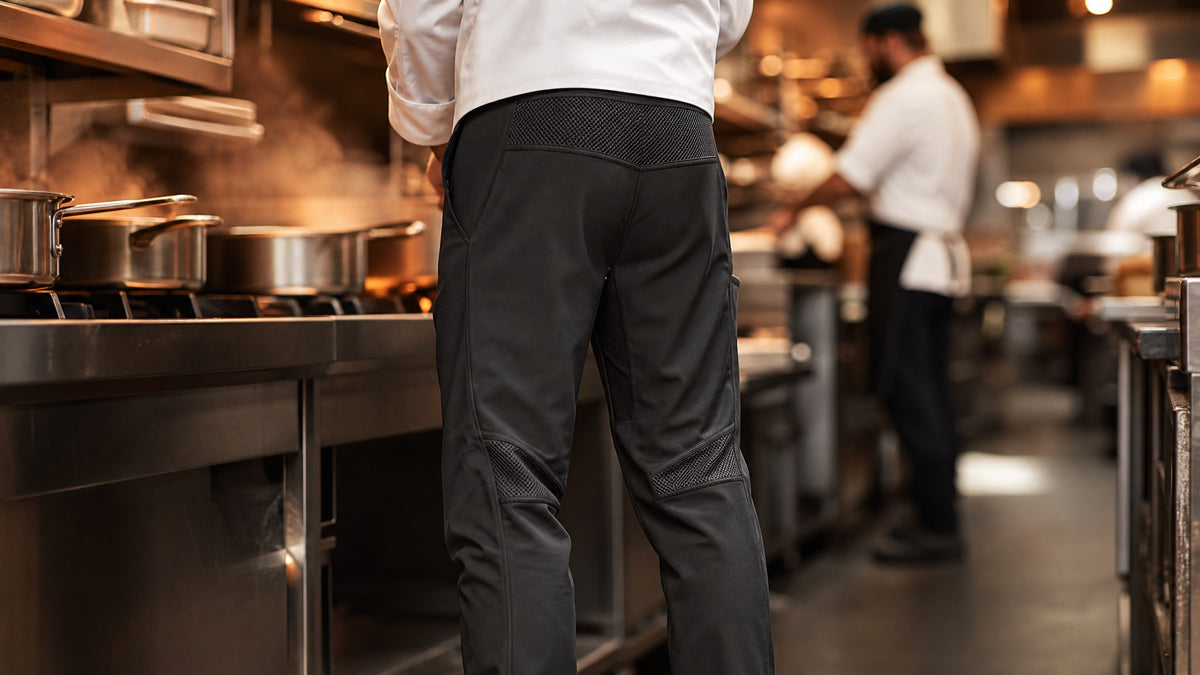
Sourcing chef trousers and jackets UK hospitality teams actually wear means looking past colour options to fabric weight, breathability and role-specific durability. Most chefwear guides treat kitchen uniforms as one category, but the physical demands on a head chef differ a lot from those on a kitchen porter or delivery driver. WorkStuff UK has supplied workwear and PPE to UK businesses for over 20 years, with B2B onboarding and credit accounts built for hospitality and catering procurement. That experience points the same way every time: the right catering workwear UK kitchens rely on depends on matching garment specs to the thermal and physical realities of each station.
Selecting Breathable Chef Trousers for Hot Kitchens
Heat management is the main failure point for standard chef trousers UK kitchens have used for years, because traditional poly-cotton blends trap moisture against the skin during a long service. You need garments that move air rather than just absorb sweat. That's why technical fabrics with targeted ventilation zones now beat generic alternatives in professional kitchens.
Mesh Air Pro Surrey Trousers for Ventilation
The Chef's Mesh Air Pro Surrey Trousers, priced at around £23.28, tackle the heat problem with mesh placed at the gusset, back waist panel and back of knee, exactly where heat builds up fastest during prep and service. These MeshAir Pro panels create airflow channels that head off the core temperature rise common in high-intensity kitchens. The slim fit keeps a professional look without restricting movement, and the range runs S to XXXL in black.

Stain Resistance and Practical Fit
Hygiene standards demand more than frequent washing. Repeated industrial laundering wears down untreated cotton fibres and shortens garment life. The Chef's Mesh Air Pro Surrey Trousers use a Texpel coating that lets liquids roll off the fabric instead of soaking in, which cuts the stain load reaching the wash and deals with the spill hazards of a busy service. Articulated knees and a fully elasticated waist with drawcord handle the constant bending and reaching at a prep station, so the trouser moves with the wearer instead of binding at the knee or hip.
Liquid repellency plus mechanical stretch means the garment keeps working through a shift instead of getting saturated and heavy.
Waterproof and Breathable Jackets for Kitchen-to-Outdoor Tasks
Staff moving between a hot kitchen and wet outdoor duties need outerwear that blocks rain without fogging up the inside of the jacket. The right waterproof layer stops the chill you get when sweat-soaked clothing meets cold air during waste disposal or a delivery run.
Fort Airflex vs Fort Flex Jacket Performance
The FORT AIRFLEX JACKET, around £29.65, has been tested to independent standards for waterproofing and breathability, and adds a concealed hood, flapped waterproof pockets and an adjustable hem and sleeves. It's suited to chefs who handle goods-in or manage external bin areas during service, since it seals out weather fast when moving between buildings. Sizes run XS to 3XL, in black, green or navy blue.

For lighter duties or a tighter budget, the FORT FLEX JACKET uses water and tear-resistant For-Tex fabric with welded seams, at around £17.28, in green or navy blue, S to 3XL. It also has a concealed hood and adjustable hem and sleeves, but the maker doesn't test it to the same independent breathability standard as the Airflex. Whether it's the right call depends on how long your team spends outdoors versus a quick trip between buildings.
Tuffstuff Hale Jacket for Thermal Regulation
Moving between an ambient kitchen and cold storage creates condensation problems a standard waterproof shell can't manage. The TUFFSTUFF HALE JACKET, around £43.46 in black or grey, S to 2XL, uses a hexagonal fleece lining built to trap air for warmth while still breathing, and the manufacturer states it has been independently tested for both waterproofing and moisture vapour transmission. That dual job means staff stay comfortable across temperature swings without changing layers, which saves time otherwise lost adjusting clothing mid-service.

You can find further technical comparisons in our waterproof workwear jackets guide if your team needs more detail for extreme weather.
Hi-Vis Outerwear for Catering Logistics and Safety Compliance
Loading bays and delivery zones bring visibility hazards that kitchen whites don't address, and they call for hi-vis garments tough enough to survive crates and pallets. Site safety rules for visibility are separate from food hygiene rules, so this kit does a different job to the kitchen uniform underneath it.
Madrid Hi-Vis Bomber for General Duties
The Madrid Hi-Vis Contrast Bomber Jacket, around £30.29, has a durable outer fabric with good abrasion resistance, which suits goods-in staff handling rough surfaces during unloading. It comes in orange/navy or yellow/navy, sizes S to XXXL. Several pockets, including one sized for a modern smartphone, keep essentials to hand without eating into the high-visibility surface the jacket needs for compliance.
PW3 Square Baffle Jacket for Cold Environments
Outdoor catering events and refrigerated transport need thermal insulation as well as visibility, which a standard hi-vis bomber doesn't give you. The PW3 Hi-Vis Square Baffle Jacket, around £79.69 in orange/black or yellow/black (S to 4XL), uses fabric technology that locks in body heat to build a thermal barrier, which suits staff moving between an ambient kitchen and a sub-zero cold store. The insulation stays lightweight rather than bulky, and the outer shell is water resistant, so staff stay visible and warm without losing mobility.

Hi-vis garments don't replace kitchen-specific hygiene wear, and wearing them inside food prep areas may break contamination protocols depending on your HACCP plan.
Insulated Work Jackets for Cold Storage and Winter Service
Freezer work and winter outdoor service ask more of a jacket than standard kitchen outerwear can give, particularly warmth that holds up during low-activity periods. Staff in these conditions need a garment that balances heat retention with enough durability to survive contact with frozen packaging and metal racking.
The KX3 Sport Downlike Baffle Jacket, around £58.44 in black or quartz/dark navy (S to XXXL), gives outstanding warmth through insulated baffle construction, and uses ripstop fabric at key reinforcement points to guard against tears from sharp edges and abrasive surfaces. That reinforcement extends garment life in high-wear zones while keeping the profile light enough for active freezer work, unlike the heavier static-insulation jackets better suited to sedentary roles. Staff moving frequently between freezer and ambient zones benefit most, since too much insulation causes overheating on the brief returns to a warmer room.
Matching Chefwear to Specific Kitchen Roles
Buying on price per unit alone ignores the fact that different kitchen roles put very different stresses on fibres and seams. Matching garment specs to the actual job cuts replacement frequency and improves comfort, and that feeds straight into retention and productivity in a sector with high staff turnover.
Head Chef vs Kitchen Porter Requirements
Line cooks and head chefs need breathability and stain resistance first, since they work in a consistently hot environment with frequent liquid exposure. That makes a lightweight option like the Mesh Air Pro Surrey Trousers the obvious pick. Kitchen porters and waste management staff face the opposite: they need robust waterproof jackets like the Fort Airflex or Fort Flex, built to handle rain, cleaning chemicals and the mechanical wear of bin handling. Our workwear trousers durability guide covers fabric weight considerations that apply just as much to chefwear across these roles.
Durability Standards for High-Volume Catering
Wash cycle frequency decides true garment lifespan more than the starting fabric quality does. Industrial laundering at 60°C or above speeds up fibre breakdown in untreated materials. Texpel-coated fabrics and welded-seam builds survive more wash cycles before they fail, because they resist both detergent attack and mechanical tumbling damage. Procurement should work out cost-per-wear rather than cost-per-garment: a cheaper item that needs replacing every eight weeks costs a lot more over a year than a premium option that lasts six months under the same conditions.
Sizing and Bulk Procurement for UK Catering Teams
Hospitality teams cover a wide range of body types, and inconsistent sizing across suppliers creates real admin work when restocking or onboarding new staff. Standardised size ranges from XS to 4XL across the Portwest and Tuffstuff items above mean you can outfit a whole team from one supplier's catalogue, rather than mixing brands that fit differently.
WorkStuff UK offers B2B credit account applications built for hospitality procurement cycles, so businesses can hold consistent stock without tying up capital during seasonal peaks. Our bulk workwear procurement guide covers account setup and volume ordering for catering teams that restock chef trousers and jackets regularly. If the chef-specific models here don't fit your needs, the full trousers collection has more options across other workwear categories.
Maintaining Hygiene and Garment Longevity
Texpel coatings and hi-vis reflective tape degrade when washed at the wrong temperature or with the wrong detergent, which hits both safety compliance and appearance. Follow the manufacturer's care instructions closely and you keep the functional properties that justify paying for technical chefwear over basic alternatives.
Waterproof membranes need reproofing from time to time to keep their breathability, since detergent residue blocks the pathways that let moisture vapour escape over repeated washes. Never bleach or dry-clean hi-vis garments: both processes break down the fluorescent dye and can push visibility below the regulatory threshold. Get the care routine right and chefwear keeps meeting UK food hygiene rules for its whole working life, protecting staff and the business alike.