
Selecting the right workwear trousers for tradesmen means looking past generic descriptions to check fabric construction, pocket configuration, and safety compliance against your daily tasks. A pair that performs well in a warehouse may fail fast on a demolition site, or lack the certification needed for roadside work. WorkStuff UK has supplied compliant workwear and PPE to individual tradespeople and businesses across Leicestershire and the East Midlands for over 20 years, which gives us a good view of which features actually survive trade environments. This guide breaks down the technical differences between trouser types so you can choose kit based on durability and function, not marketing claims.
Choosing Ripstop vs Stretch Fabric for Trade Work
Fabric choice decides both the lifespan of the garment and your range of motion. Understanding the mechanical difference between ripstop and stretch weaves matters before you buy. Match the textile to your primary work environment: a fabric built for abrasion resistance will always feel stiffer than one built for mobility.
When to Select Ripstop Combat Trousers
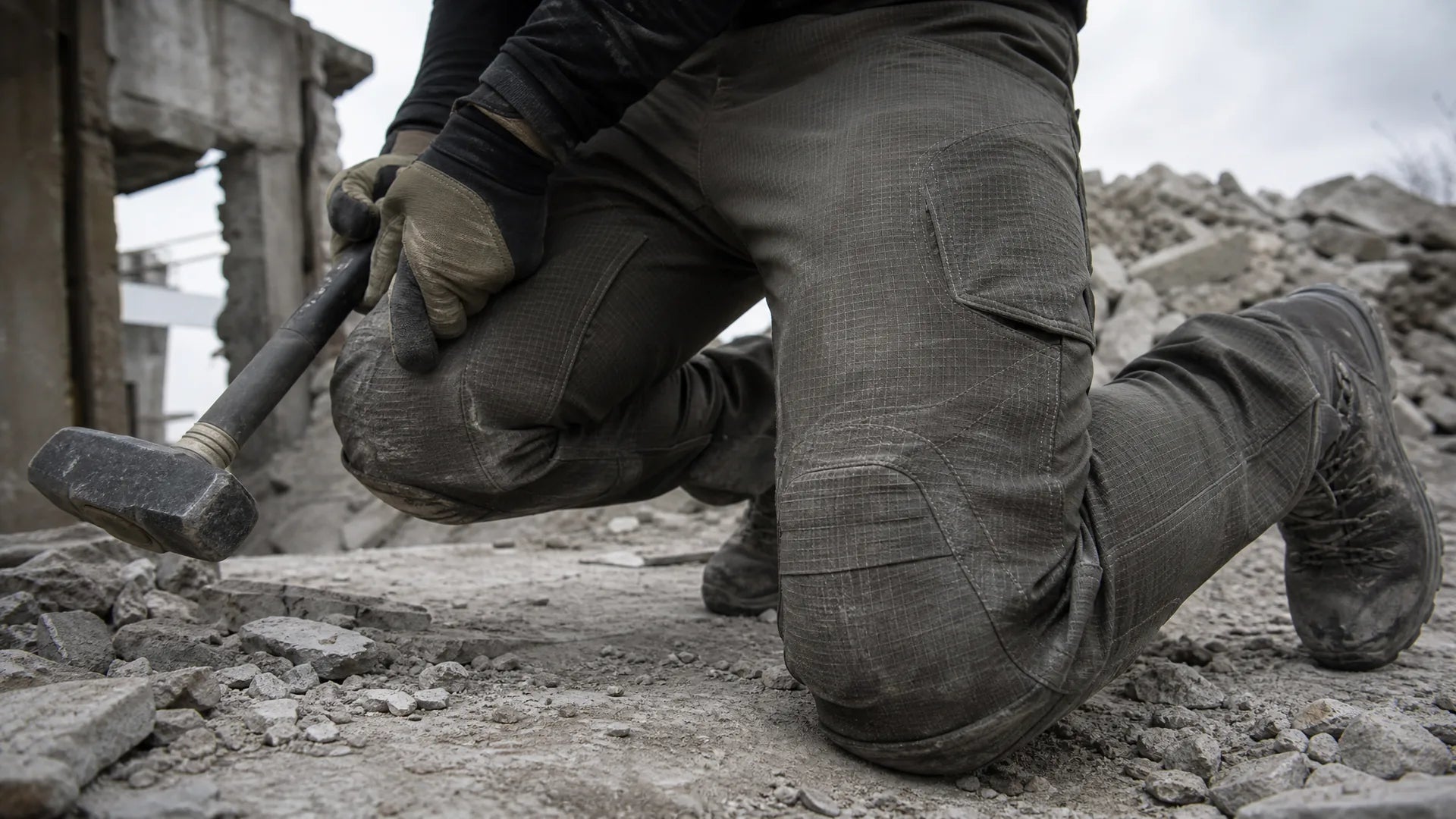
Ripstop weave construction stops small tears from spreading across the garment during abrasive tasks. This grid-like reinforcement makes the Ripstop Combat Trousers suited to demolition, groundwork, or any role with frequent contact with sharp edges and rough masonry. The trade-off is less stretch than you get with stretch fabrics, but that rigidity protects against the snags that would destroy standard cotton twill. These trousers are built to take punishment in high-wear zones without losing structural integrity.

Benefits of 4-Way Stretch Lightweight Options
Roles that involve a lot of bending, climbing, or crouching benefit more from the give of 4-way stretch fabric than from heavy-duty tear resistance. The Stretch Lightweight Combat Trousers, priced around £22.85, pair that stretch fabric with side waist elastic and a belt to keep things comfortable through repetitive movement, without binding at the knees or hips. According to the product description, they're built for "incredible performance all year round." They offer less protection against severe abrasion than ripstop, but they cut fatigue for electricians, HVAC technicians, and fitters who need to move freely more than they need armor.
Knee Pad Compatibility and Protection Standards
Standard trouser designs have no internal structure to hold knee protection in place, so pads shift away from the kneecap the moment you bend your leg. Dedicated knee pad pockets fix this by creating a sealed channel that keeps protective gear lined up with your joint during prolonged kneeling work, which matters for meeting UK PPE legal requirements around lower limb protection.
Integrating Ergonomic Knee Pads
Ergonomic knee pads shaped for a good fit stop pressure points building up during prolonged kneeling, spreading force across a wider area instead of concentrating it on the patella. The APKNEE Black ergonomic knee pads, around £8.74 and sold as one size, are shaped to follow the joint's natural contours, cutting the discomfort that often makes workers pull protection off mid-shift. Pair these with compatible trousers and the padding stays effective even after hours of floor work.
Cargo Styles with Dedicated Knee Pad Pockets
The Cargo Trouser with Knee Pad Pockets Long, made from a 65% polyester, 35% cotton, 245 GSM fabric and priced around £16.04, has the internal architecture to hold knee pads at the right height. That's the detail that separates real trade workwear from general-purpose cargo pants with only external patch pockets. Floor layers, plumbers, and tilers should check that their chosen trouser includes these dedicated insertion points before buying separate knee protection. Compatibility varies a lot between ranges.

Hi-Vis Compliance and Visibility Features
High-visibility clothing has to meet specific reflective surface area standards to be legally compliant on many UK worksites, yet traditional rigid tape can badly restrict movement in stretch garments. A segmented HiVisTex Pro tape configuration lets the stretch fabric move without cutting into the reflective surface area, which solves the conflict between compliance and comfort. Check that any hi-vis trouser you pick keeps its visibility rating even when the fabric stretches during active work.
The RWS Hi-Vis Stretch Work Trousers, around £42.40 and running from size 46E to 64E, show how modern safety garments balance compliance with 4-way stretch comfort through segmented tape. This RWS configuration uses premium HiVisTex Pro tape arranged in sections that flex independently with the fabric underneath. For more detail on selecting compliant sizes and understanding current standards, see our resource on hi-vis trouser sizing and standards.
Fit Options for Female and Maternity Workwear
Unisex workwear sizing fails women in trades because it scales male proportions instead of addressing female hip-to-waist ratios and maternity needs. Properly designed female-specific workwear accounts for these differences while holding the same durability and safety standards as the men's equivalents.
Slim Fit Stretch Cargo Designs
The Women's Stretch Cargo Trousers, around £23.91 in black or navy, offer a slim fit in cotton stretch twill that moves with the wearer rather than gaping at the waist or binding at the hips. The cut gives a professional look and functional comfort without excess material that could snag on machinery. Features include side pockets, a rear buttoned jetted pocket, and twin stitching for durability.
Adjustable Maternity Trouser Features
Pregnant workers need waistbands that adjust to changing body dimensions without giving up safety certification or a professional look. The Stretch Maternity Trousers, around £25.50 and sized S through XXXL, provide that flexibility through specialised waist construction, while keeping the same durable cotton stretch twill and functional pocket layout as the standard range. That means expectant mothers can stay compliant and comfortable on site instead of making do with unisex trousers that don't fit properly.
Cuffed Hems and Practical Design Details
Open trouser hems let dust, swarf, and debris into boots throughout the day, which is uncomfortable and wears out footwear faster. A cuffed hem creates a physical barrier against site debris and protects the ankle area from abrasion against rough surfaces or ladder rungs.
The Stretch Lightweight Cuffed Trousers, around £22.85, add this cuff to the same 4-way stretch fabric and side waist elastic used in the standard lightweight range. The cuff seals out contaminants, the stretch fabric allows movement, and the elastic waist takes up positional changes without digging in. Details like these are what separate purpose-built trade trousers from generic work pants that only solve one problem at a time.
Sizing Consistency Across Workwear Ranges
Mixed teams need consistent sizing across garment types so every worker gets properly fitting PPE without a lot of trial and error. Across the ranges covered here, sizes run from waist 28 up to 64E, with short, regular, and extended lengths available depending on the style. That breadth cuts returns and downtime caused by ill-fitting kit, which matters when you're outfitting crews with a wide range of body types.
Procurement staff should check team measurements against the size chart for each specific product before ordering. Fit varies between the ripstop, stretch, and hi-vis ranges despite similar nominal sizing. Keeping accurate size records for each employee makes reordering simpler and gets new hires into the correct kit from day one.
Procuring Durable Work Trousers for Teams
Bulk purchasing decisions should account for size consolidation, seasonal rotation, and credit terms that fit your business's cash flow, rather than treating workwear as an ad-hoc expense. You can streamline team outfitting by consolidating orders across multiple sites and using B2B accounts with structured payment options for ongoing supply. Our bulk workwear procurement guide sets out frameworks for planning these purchases.
This guide covers the main selection criteria, but it can't replace a hands-on look at your specific working conditions and team preferences. Browse the full workwear trousers range to compare specifications directly, or contact WorkStuff UK to discuss bulk pricing and credit account setup for your organisation.