
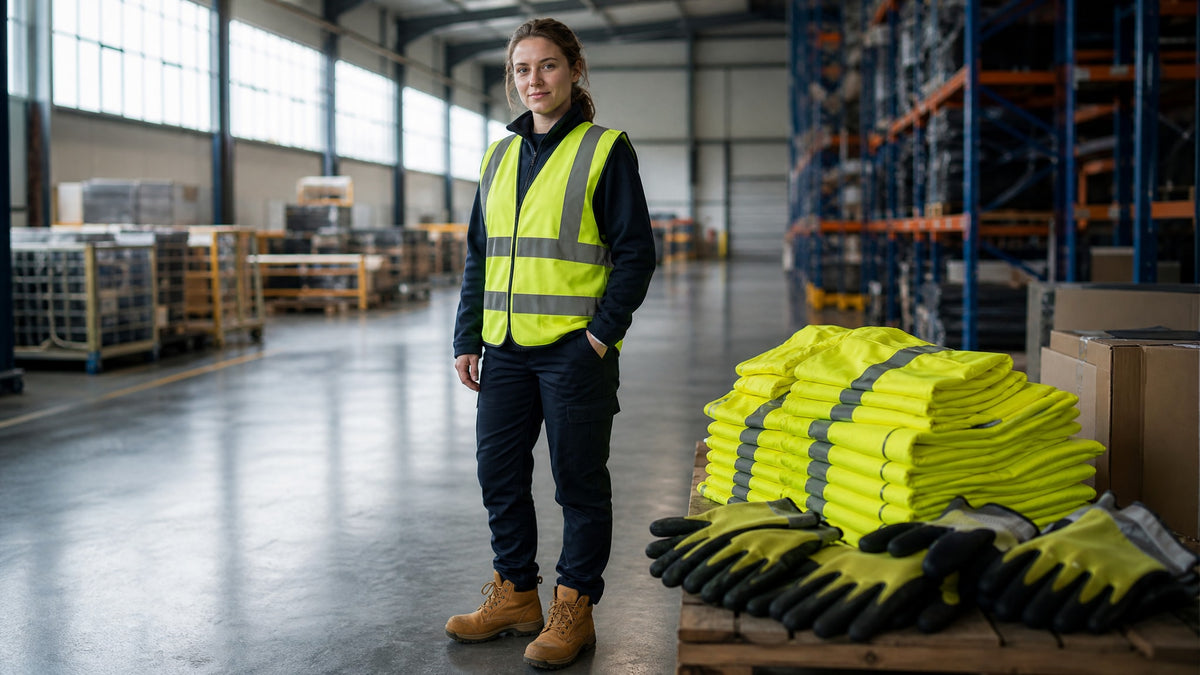
Procurement for warehouse environments means balancing strict safety compliance with the practical realities of daily logistics work. You need gear that protects staff during long shifts on concrete floors while meeting current UK regulations, but generic retail advice rarely addresses the bundling and bulk-ordering challenges operations managers actually face. WorkStuff UK has supplied compliant workwear and PPE to UK businesses for over 20 years, supporting individual tradespeople and corporate procurement teams alike with functional kit rather than fashion apparel.
This checklist covers the specifications that matter for warehouse safety clothing, plus the bulk supply strategies that keep reordering simple. We separate mandatory standards from operational preferences so you can build a durable, compliant uniform system for mixed indoor and outdoor teams.
Core Warehouse Safety Clothing Requirements
UK regulations set protection levels based on documented risk assessments, not general industry assumptions. Every item in your inventory needs to meet the relevant EN ISO standards for your site's specific hazards before it goes to staff. Compliance, not brand preference, should drive procurement for managers running mixed teams. UK PPE legal requirements explain the statutory duties behind this, which matters more than any supplier's marketing claims.
Mandatory safety gear includes certified high-visibility garments for any zone where pedestrians share space with vehicles or moving machinery. Comfort items like thermal base layers or padded gloves stay optional unless your risk assessment flags cold stress or abrasion as a real hazard. Keeping these categories separate stops you overspending on upgrades nobody needs, while making sure no genuine protection gap goes unfilled.
Compliance documentation should accompany every purchase, for audits and for insurance.
Hi-Vis Classifications for Indoor and Outdoor Zones
EN ISO 20471 sets minimum visible surface areas and reflective tape configurations for different risk environments across your site. Loading bays and external yards typically need Class 2 or Class 3 garments, because of vehicle traffic and changing light. Internal racking aisles under steady artificial lighting can often get by with Class 1 for certain tasks. Matching the class to the zone avoids both under-protection where it counts and needless bulk where it just gets in the way.
Your risk assessment should map each zone to a classification requirement rather than applying one standard across the whole site.
Class 1 vs Class 2 Visibility Standards
Class 1 garments give the minimum certified visibility area and suit low-risk internal zones, where vehicle speeds are limited and lighting is good. The ES1 Essential Hi-Vis Band and Brace Vest offers this baseline at around GBP 2.34, a cost-effective choice for visitors or staff in segregated pedestrian areas. Class 2 needs considerably more fluorescent background material and reflective tape, and it's what most active warehouse floor work involving forklifts calls for.
The Uneek Hi Vis Safety Waistcoat is EN ISO 20471 Class 2 approved and washable up to 25 times, priced around GBP 2.30–3.36 depending on size. That wash limit matters because reflective performance drops with laundering. Knowing the certified figure lets you schedule replacements before a garment fails an audit, rather than guessing at service life from cheaper uncertified alternatives.
Executive Vests for Supervisors and Visitors
Supervisory staff need visibility plus somewhere to put a radio, a clipboard, and an ID badge, which a basic vest can't offer. The Warsaw Hi-Vis Contrast Executive Vest has multiple pockets, a dual ID holder, a D-ring and a radio loop, priced around GBP 9.04, while staying fully EN ISO 20471 compliant. These additions turn hi-vis from passive safety equipment into something a supervisor actually carries their kit in, without losing certification.
Mesh variants like the Athens Hi-Vis Mesh Executive Vest, around GBP 9.56, use MeshAir technology for airflow in warmer months or heated distribution centres. Better airflow means fewer supervisors peeling off PPE because they're too hot, and overheating is one of the more common reasons compliance slips on a warm shift. Comfort here is what keeps the vest on for the whole shift.
Essential Footwear and Hand Protection for Concrete Floors
Warehouse flooring makes physical demands that standard safety footwear specs often miss. Polished concrete gets slippery once dust or moisture is on it, and standing on unyielding ground for hours speeds up fatigue-related injury and cuts productivity. Footwear choice needs to weigh slip resistance and anti-fatigue sole construction alongside basic toe protection, not toe protection alone.
Specify grip pattern and cushioning against your actual floor conditions, not a generic catalogue description.
Steel Toe Cap Boots for Forklift Operators
Forklift operators need footwear that keeps pedal sensitivity while still protecting against impact over a long shift. Anti-fatigue midsoles cut lower-limb strain over a twelve-hour day, which shows up directly in fewer musculoskeletal absences. Slip-resistant outsoles rated for polished concrete matter most during mounting and dismounting, where most warehouse foot injuries happen.
Steel toe caps stay mandatory for any role facing crushing hazards from palletised goods or vehicle wheels. That said, composite materials in modern safety footwear often match steel for protection while weighing less and insulating better in cold stores. Choosing the toe cap material for the actual thermal and weight demands of the job gets you better wearer acceptance without giving up any safety margin.
Grip and Cut Resistance for Manual Handling
Manual handling exposes workers to abrasion, cuts and punctures from box edges, strapping and pallet timber. Gloves need to balance cut resistance against enough dexterity to handle small parts and touchscreens without taking them off. Matching EN 388 ratings to your actual handling tasks stops the dangerous habit of workers ditching uncomfortable gloves halfway through a shift.
Grip coatings built for dry cardboard aren't the same as those built for oily metal or wet packaging. Match the coating chemistry to whatever your team handles most, and gloves last longer and protect more consistently. It's worth asking suppliers for sample pairs to field-test before a bulk order goes in; datasheets rarely capture how a glove actually feels on the job.
Seasonal Layering with Technical Hi-Vis Sweatshirts
Unheated warehouse zones make temperature management awkward with ordinary layering. A bulky non-certified outer layer blocks visibility and restricts movement on technical tasks, and taking hi-vis off for warmth breaks safety protocol outright. Technical mid-layers solve this by combining certified visibility with insulation in one garment built for active industrial use.
The DX4 Hi-Vis Class 1 Funnel Neck Zipped Sweatshirt, around GBP 72.25, uses fleece bonded fabric and segmented HiVisTex Pro tape so movement stays unrestricted during technical tasks. The segmented tape flexes with the garment instead of cracking or peeling after repeated washing. Two zipped chest and side entry pockets add secure storage without the bulk that fouls a harness fit or a seatbelt.
This closes the gap that opens up when workers pull a non-compliant personal jacket over a certified vest in cold weather.
Bulk Uniform Kits and Supplier Selection Criteria
Standardising your warehouse uniform into predefined kits simplifies size allocation, cuts administrative overhead, and keeps protection consistent across the workforce. Bundling hi-vis vests, trousers, boots and gloves into role-specific packages stops piecemeal ordering errors and means new starters get a complete, compliant kit on day one. Our bulk workwear procurement guide sets out a framework for doing this across multi-site operations.
Kit bundling only works if you collect accurate size data before the first order goes in; that's what keeps exchange volumes and the delays that come with them down.
Standardizing Sizes Across Diverse Teams
Start with individual measurements rather than self-reported sizing, which varies between brands and garment types. A master size register linked to employee records lets you reorder fast when staff join, leave, or need a replacement for wear or damage. That database removes the guesswork and cuts the admin load of managing returns and exchanges for the wrong size.
Stock core sizes more heavily based on your own usage history, and you avoid stockouts during peak recruitment or seasonal turnover. Buffer inventory in the sizes you need most keeps supply continuous and avoids emergency order premiums and rush delivery charges. Twelve months of your own consumption data will forecast better than a national average size distribution that may not match your workforce at all.
Credit Accounts and B2B Onboarding
A trade credit account lines payment terms up with your billing cycles instead of tying up capital in upfront safety equipment purchases. A consistent supplier relationship cuts procurement friction and gets you dedicated account support for urgent requirements or spec changes. When choosing a reliable hi-vis supplier, look for proven B2B infrastructure over a retailer built mainly for consumer transactions.
WorkStuff UK offers B2B onboarding and credit account applications built for business customers running ongoing workwear programmes. That comes from two decades supplying UK logistics operations, not a retail system adapted after the fact. A reliable supply relationship matters as much as any single product spec when you're keeping a large team compliant continuously.
Maintaining Compliance Through Proper Garment Care
Hi-vis garments lose their certified protective properties through laundering long before they look worn out. Improper washing is a common cause of safety audit failures in UK logistics facilities, because you can't judge reflective tape performance by eye. Following the manufacturer's care instructions preserves certification for the garment's stated service life and keeps your organisation clear of liability exposure.
Base replacement scheduling on certified wash cycles, not on how a garment looks or an arbitrary calendar date. The Uneek Hi Vis Safety Waistcoat specifies twenty-five washes as its maximum compliant lifecycle, which gives you a concrete number for inventory rotation. Track issue dates and estimated wash frequency, and you can replace garments before they go non-compliant mid-shift.
Industrial laundering often extends garment life beyond domestic washing, thanks to controlled temperature and chemical dosing. Outsourcing the laundry also creates a record showing proper care was followed across the whole workforce, which strengthens your position at a regulatory inspection or after an incident.
Branding and Identification Options for Warehouse Teams
Branded uniforms do real operational work beyond corporate identity in large distribution centres, where security and role differentiation matter in practice. Distinct colour coding or logo placement lets you spot authorised personnel against visitors or contractors in restricted zones at a glance. That speeds up security screening and helps people find the right role fast during a busy shift.
Logo placement on executive vests and sweatshirts has to respect the minimum visible surface area EN ISO 20471 requires, even after customisation. Garment branding services that understand this position logos to keep the reflective coverage compliant. DIY branding or a non-specialist embroiderer risks invalidating the certification through poor tape coverage or fabric damage.
A consistent, professional appearance also does something for team cohesion; it signals that safety is a standard, not an afterthought. Uniform consistency cuts social friction in a diverse workforce and sets clear expectations about conduct and protection on site.