
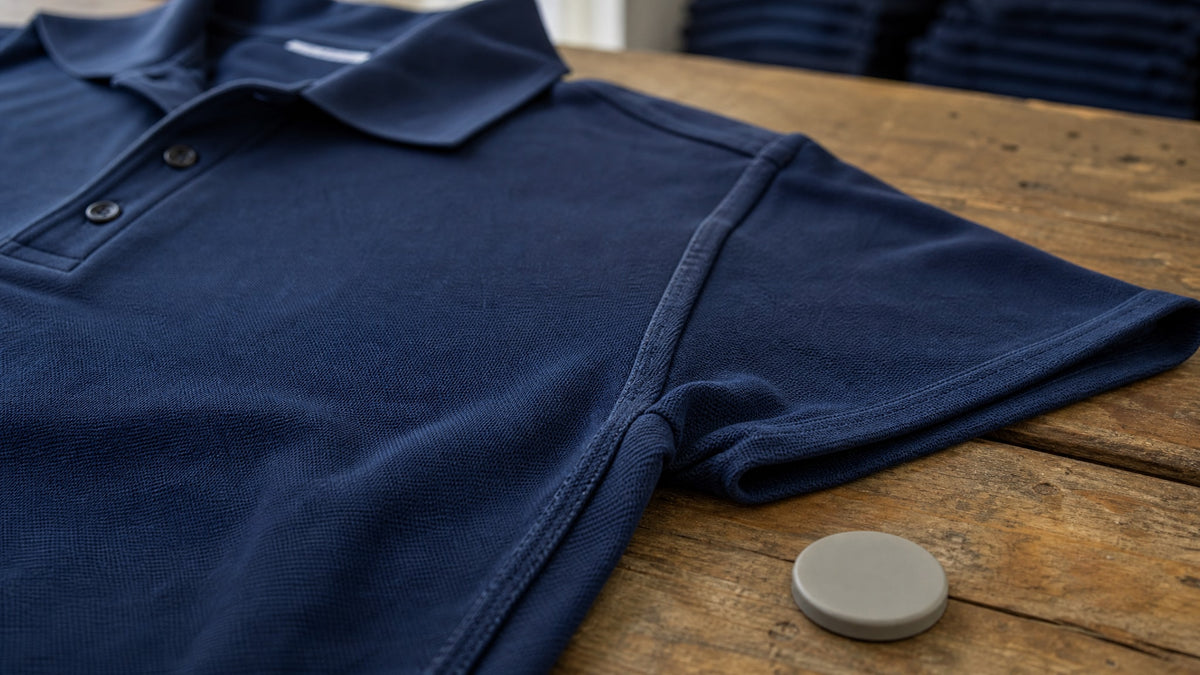
Sourcing polo shirts with company logo UK buyers often find a market saturated with promotional merchandise built for single-use events rather than daily work. These lightweight garments do a job at trade shows, but they rarely survive an industrial laundry cycle or hold their shape after repeated wear. WorkStuff UK has supplied workwear and uniforms to UK businesses for over 20 years, and the focus has always been practical durability over promotional trends.
Genuine workwear polos differ from giveaway items in construction, fabric weight and branding resilience. Staff clothing needs to hold its shape, colour and logo through hundreds of wash cycles, not just the first few weeks. That gap between disposable promo wear and a durable corporate uniform polo shirt decides both your long-term cost and the standard your team presents to clients.
Why Durability Matters More Than Price for Staff Uniforms
The unit price of a branded polo can mislead you when you work out the true cost of outfitting a workforce across several quarters. A cheap shirt that fades, shrinks or loses its logo after twenty washes costs more per wear than a tougher one that lasts for years.
Promotional suppliers keep costs low because their customer usually wears the garment once or twice before binning it. Workwear manufacturers build for longevity instead, using reinforced seams and higher-grade dyes that survive daily wear and hot washing. Once you factor in replacement frequency and the admin time of reordering, the premium for workwear-grade fabric pays for itself.
This approach won't suit a business that wants cheap, temporary apparel for a one-off marketing push where the shirts are meant to be thrown away.
Your budget should match how your staff actually use the clothing, not the lowest tender price for generic garments.
Fabric Weight and Composition for Daily Wear
Fabric specifications tell you more than anything else whether a polo shirt can work as daily workwear or whether it's really just casual office attire. Fabrics under 150gsm tend to go thin and lose shape once they're put through the high temperatures needed for hygienic industrial laundering.
Understanding GSM and Blend Ratios
Grams per square metre measures fabric density, and that density is what drives abrasion resistance and opacity during physical work. Industrial launderable workwear polos generally need a minimum of 180gsm to hold their shape through repeated hot washes without going misshapen or threadbare. The Kustom Kit Tailored Fit Superwash 60 Pique Shirt uses 180/185g/m² fabric with double-stitched armholes and side seams built for that kind of wear, and it's a useful benchmark for what counts as solid construction. That weight lets the garment hang correctly and resist the pulling forces of an active role, whereas lighter shirts often twist at the side seams within weeks.
Polycotton vs Cotton for Industrial Laundering
Pure cotton breathes well but shrinks noticeably and dries slowly, which slows down uniform rotation in a busy workplace. Polycotton blends dominate workwear because the polyester keeps the shirt's shape while the cotton keeps it comfortable against the skin. A 65/35 or 50/50 blend resists wrinkling and dries fast, so you can get away with fewer garments per employee since turnaround is quicker. Elastane, found in some technical workwear shirts, adds further durability by letting the fabric stretch and recover without permanent stretching, so fit stays consistent over the shirt's life.
Embroidered Polo Shirts UK: Branding That Survives Washing
Screen printing sits on the surface of the fabric and eventually cracks and peels under industrial detergents and repeated agitation. Embroidery works the branding into the fabric itself, which makes it far more resistant to the chemical and thermal stress of professional laundering.
Thread Quality and Stitch Density
Good machine embroidery uses rayon or polyester threads rated to hold colour at temperatures well above a standard domestic wash. Stitch density has to be high enough for solid coverage without puckering the fabric underneath, which means balancing thread tension against the weight of the polo itself. You can explore our custom embroidery services to see how proper digitisation stops logo distortion on heavier workwear fabrics. Cheap embroidery cuts corners on stitch count to save time, and the result is a sparse logo that snags, breaks and degrades quickly.
Placement Guidelines for Corporate Logos
Logo position affects both visibility and how long the garment lasts, since branding placed too close to a seam or collar rubs and wears faster. Standard left-chest placement keeps the logo visible during a handshake or conversation while staying clear of the friction from tool belts or harnesses. Our guide to branded uniform options covers sizing and placement that keeps proportions right across different garment sizes. Back-of-neck branding works for identification but needs a smaller stitch count to avoid irritation. Functional requirements should drive these design choices, not just how it looks on a mock-up.
Selecting the Right Fit and Style for Your Team
Fit affects both safety and morale. Clothing that's too tight restricts movement; clothing that's too loose looks unprofessional and can snag on machinery. You need styling that looks the part while still giving staff room to move in an active job.
Tailored vs Slim Fit Options
Slim fit suits static office roles but often restricts shoulder and back movement when staff reach, lift or bend. Tailored fit workwear polos give more room through the torso and sleeves while keeping a structured shape, avoiding the boxy look of a traditional unisex cut. This matters for mixed teams, since assuming everyone wants or can wear the same cut leads to complaints and non-compliance. Giving staff size samples before a bulk order lets them find their fit within that brand's own sizing chart, which cuts returns and gets everyone the right kit first time.
Coordinating Polos with Workwear Trousers
Matching colours and compatible fabric weights across tops and bottoms builds a uniform look that reinforces the brand. The Leicester College Polo & Trouser bundle is a good example of coordinated sourcing, with matching colours and compatible sizing across garment types for straightforward procurement. For staff who need more flexibility, pairing a polo with a technical trouser like the Yellowknife Elasticated hem 4-way stretch trouser adds mobility without losing the professional look of the uniform as a whole. That coordination goes beyond looks too: compatible garments are usually tested together so they hold up equally well under the same laundering conditions.
Washability and Care Standards for Branded Workwear
Industrial wash ratings tell you the maximum temperature a garment can take, repeatedly, without breaking down, and that's the first filter to apply when choosing workwear polos. Superwash 60 certification means the item has been tested to survive sixty-degree wash cycles indefinitely, which matters for removing oils, grease and biological contaminants common in trade environments.
Domestic-rated garments usually lack this certification and will shrink, fade or delaminate when run through the commercial laundry systems used for heavy soil removal. Following the manufacturer's care instructions keeps both the safety compliance and the appearance of the uniform intact, and avoids paying to replace shirts early. Proper care also protects your branding spend: a logo applied correctly to a certified garment will outlast one on an uncertified shirt, whatever the embroidery quality.
Bulk Ordering and B2B Supply Consistency
Buying uniforms for a team throws up logistics that retail buying rarely has to deal with. Size runs vary between manufacturers, and even between production batches of the same model, which frustrates staff and complicates stock control.
Managing Size Runs and Reorders
A relationship with a dedicated workwear supplier cuts the risk of batch variation, since business accounts get access to stock lines held back for exactly that purpose. Our bulk ordering process sets out how to track size allocations and forecast reorders from actual wear patterns rather than guesswork. Keeping a record of which size each employee wears means you can restock accurately without making everyone try on new garments every time, which cuts admin and speeds up distribution. It also stops stock piling up in sizes nobody wants, while keeping the sizes you actually need in stock for new starters.
Credit Accounts for Ongoing Uniform Needs
Cash flow often forces businesses to delay uniform replacement until the next budget cycle, leaving staff in worn-out kit that reflects badly on the business. A trade credit application lets you spread the cost and order replacements as you need them, rather than batching purchases around payment cycles. Trade accounts also tend to come with priority stock access and dedicated support when something goes wrong with an order, which matters when a new starter needs kit today, not next week. That flexibility turns uniform buying from an occasional capital hit into an ongoing cost that scales with your workforce.
Compliance and Professional Standards in Staff Clothing
Workwear does more than protect. It's a visible sign of how an organisation runs itself, and clients notice it in facilities management, engineering and similar client-facing sectors. Compliant workwear isn't only hi-vis: it includes clean, well-fitting polos that meet the hygiene and professionalism expected in that sector. Letting this slide undermines the wider safety culture, because it tells staff that standards are optional when in fact consistent enforcement is what makes every protocol stick.